China’s plant-protein suppliers face a practical challenge: an ingredient can meet its protein specification yet still form lumps in a beverage. Solubility affects texture, sediment, and the consumer’s first sip. It also shapes how well a formulation performs during mixing, heating, and storage. For buyers comparing suppliers, a protein percentage alone tells only part of the story.
Food scientist David Julian McClements’s published work on food ingredients offers a useful formulation principle: protein structure and processing conditions both influence performance. In other words, “how to enhance solubility in plant protein formulations” is not simply a matter of adding more powder. Start with consistent hydration, then assess pH, temperature, mineral content, and particle size. A bench test can reveal visible clumps; a measured solubility test can help compare batches more reliably. Small changes matter. A slight pH shift may alter dispersion, while excessive heat can affect protein behavior. That sounds tidy on paper. Real batches are less obedient.
This introduction examines how suppliers and formulators can evaluate these variables without relying on broad claims. Ask for technical data, batch consistency information, and test conditions that match the intended application. A protein designed for a neutral drink may behave differently in an acidic beverage or a high-mineral blend. No single treatment works everywhere. Careful trials, clear specifications, and honest reporting remain essential. The goal is not perfect solubility in every setting, but reliable performance in the product that people actually drink.
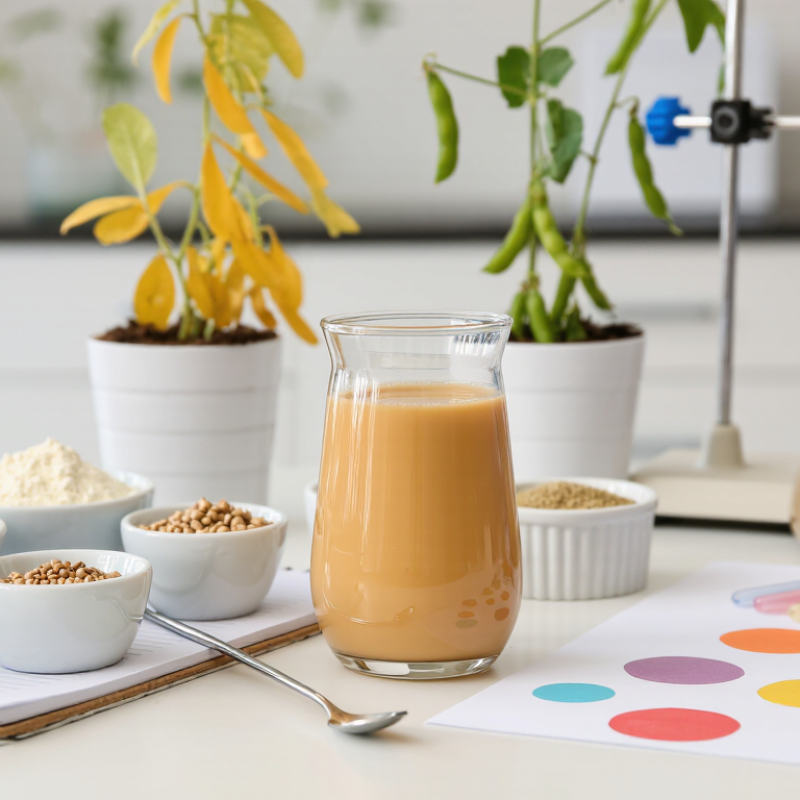
China’s plant-protein supplier landscape reflects a mix of large-scale crop processing and specialized ingredient production. Soy protein is widely available as flour, concentrate, and isolate for beverages, bakery products, and meat alternatives. Pea protein is another common choice, while rice, wheat, and fava proteins serve more specific formulation needs. The differences matter. Supply, protein content, and functionality can vary by processor, crop quality, and production method.
For buyers, the protein source is only part of the solubility picture. Heat treatment, extraction conditions, drying, and particle size can all affect how quickly powder disperses in water. A fine powder may still form lumps if its surface wets poorly. Ask suppliers for test methods and results under conditions close to your process, including water temperature, pH, and mixing time. A single solubility number may not predict performance in an acidic drink or a high-protein shake.
Supplier evaluation should include a small application trial, not just a specification sheet. Check for sediment after mixing, foam, texture, and changes during storage. Request details on crop origin, batch consistency, and routine quality checks. Some batches behave differently, and that deserves scrutiny. I would not assume that a familiar protein source guarantees a reliable result; processing details often make the difference.
Solubility describes how much of a plant protein disperses into a liquid and remains there under specified conditions. It is not the same as instant wetting or easy mixing. A powder may disappear quickly in a shaker, then form sediment after standing. In a finished drink, that can mean a gritty sip or a visible layer at the bottom.
The result depends on the protein source, processing, pH, temperature, and other ingredients. Near a protein’s isoelectric point, its solubility often decreases. Heat can also encourage aggregation, though the effect varies by ingredient and process. Small changes matter.
A practical comparison uses the same powder concentration, water temperature, mixing time, and pH, then measures the soluble fraction after separation, such as centrifugation. A kitchen test can reveal clumping, but it cannot replace a controlled measurement.
I have seen “soluble” used as if it meant one universal performance level; it doesn’t. When evaluating supplier data, check the test conditions and consider how the ingredient behaves in the actual recipe, not only in water.
Plant protein solubility depends on more than the ingredient label. Protein source, processing history, pH, temperature, and mineral content all shape how well it disperses. Small changes matter. Pea and soy proteins, for example, can behave differently because their protein structures and natural compounds are not the same.
pH is a major factor. Near a protein’s isoelectric point, its particles carry less electrical charge and may clump or settle. Moving the pH away from that point can improve dispersion, though the best range depends on the specific protein and final product. Salt and calcium can also affect particle interactions. Too much may encourage aggregation, especially in a concentrated drink.
Processing leaves visible clues. Excessive heating can make proteins unfold and bond together, reducing solubility; controlled heat treatment may improve other functional properties. Finer particles often wet and disperse faster, but smaller does not always mean better. In formulation trials, compare samples at the same temperature and mixing speed, then check for sediment after standing. A simple glass test helps, but it cannot replace proper measurement. The trade-off is real: improving solubility may change texture or flavor, and the result is not always neat.
Protein solubility is generally lowest near its isoelectric point (pI), where the protein carries little net electrical charge. Moving the pH farther from the pI often increases solubility. The values below are approximate typical pI values; they can vary with protein fraction and measurement method.
Other important influences include temperature, ionic strength, protein processing, and the composition of the surrounding solution.
Plant protein solubility depends on both the raw material and its processing history. In a processing line, pH adjustment can move proteins away from their isoelectric point, where they tend to clump. A controlled pH shift may help disperse pea or soy protein in water. Then, neutralization is essential. Residual acidity can affect taste and product performance.
Enzymatic hydrolysis breaks some protein bonds into smaller peptides, often improving dispersibility. Too much hydrolysis, however, can create bitterness or weaken texture. Moderate heat treatment may reduce certain anti-nutritional factors, but excessive heat can make proteins aggregate. High-pressure homogenization can help break visible particles into finer droplets. It is not a cure-all. Operators should test different pressures and temperatures on small batches before scaling up. Spray drying conditions also matter: overly harsh drying may reduce rehydration, even when the powder looks smooth. Measure solubility under consistent conditions, including water temperature, pH, mixing time, and protein concentration. Results can still vary between batches. That variation deserves attention. A clear specification and routine testing help suppliers identify whether a change improved solubility or merely changed appearance.
Solubility depends on the protein source, extraction history, pH, temperature, ionic strength, and intended application. The methods below are commonly used processing approaches; their effects should be verified for each ingredient and formulation.
| Processing Method | How It Can Affect Solubility | Typical Process Considerations | Potential Applications | Key Limitations and Quality Checks |
|---|---|---|---|---|
| pH shifting | Moving the protein away from its isoelectric region can increase net charge and electrostatic repulsion, helping proteins disperse. A pH cycle may also alter protein structure. | Disperse the protein at an alkaline or acidic pH, then adjust to the target pH. Control pH, mixing, holding time, and neutralization conditions. | Acidic beverages, neutral drinks, sauces, and other products where dispersion at a defined pH is important. | Near the isoelectric point, many proteins have reduced solubility. Strong pH treatment can affect flavor, color, functionality, or nutritional quality; verify solubility at the final product pH. |
| Enzymatic hydrolysis | Proteases break some peptide bonds, producing smaller peptides that are often more soluble across a wider pH range. | Select enzyme type and dose, and control pH, temperature, reaction time, and enzyme inactivation. Degree of hydrolysis is an important process control. | Protein drinks, clear or semi-clear beverages, soups, and formulations requiring improved dispersibility. | Excessive hydrolysis can create bitterness and reduce gelation or emulsifying performance. Assess taste, peptide profile, and the functions needed in the final product. |
| Controlled thermal treatment | Moderate heating can unfold some proteins and expose hydrophilic groups, but it can also promote aggregation and reduce solubility, especially under unsuitable pH or concentration conditions. | Optimize temperature, time, protein concentration, pH, and cooling rate. Compare solubility before and after treatment under the intended formulation conditions. | Ingredients requiring a specific balance of hydration, viscosity, emulsification, or heat stability. | The effect is highly source- and process-dependent. Overheating may cause irreversible aggregation, lower solubility, or impair functionality. |
| Ultrasound-assisted processing | Cavitation and shear can reduce particle or aggregate size and improve dispersion; changes in protein structure may also affect solubility. | Control delivered energy, treatment time, temperature rise, sample volume, and equipment configuration. Scale-up should be validated. | Liquid protein dispersions and formulations where faster wetting or improved dispersion is desired. | Results vary with protein type and treatment intensity. Excessive treatment can cause aggregation or oxidation; measure particle size and solubility after processing. |
| High-pressure processing | Pressure can change protein conformation and protein–water interactions. Depending on pressure, time, temperature, and composition, solubility may improve or decrease. | Evaluate pressure level, holding time, temperature, and protein concentration using the intended product matrix. | Liquid foods and dispersions where non-thermal or reduced-thermal processing is being considered. | Not all proteins respond in the same way. Pressure-induced unfolding can lead to aggregation; assess solubility, viscosity, and other target functions together. |
| Fermentation | Microbial enzymes and acidification can modify proteins and reduce some antinutritional factors. Solubility can change as pH moves toward or away from the protein’s isoelectric region. | Choose an appropriate culture and control fermentation time, temperature, pH, and endpoint. Stabilize the ingredient after fermentation as needed. | Fermented beverages, plant-based foods, and ingredients where flavor or digestibility is also a target. | Acidification alone does not guarantee higher solubility. Monitor pH, flavor, microbial safety, and solubility after any neutralization or drying step. |
| Particle-size reduction and improved wetting | Milling, agglomeration, or surface treatment can improve hydration and dispersion. Smaller particles do not necessarily have greater molecular solubility. | Control particle-size distribution, moisture, agglomeration, and mixing sequence. Test dispersion under realistic mixing conditions. | Powdered beverage mixes, instant products, and dry blends. | Distinguish dispersibility from solubility: a powder may wet and disperse faster without increasing the amount of protein that dissolves. |
Practical evaluation: test each ingredient at the intended pH, temperature, ionic strength, and protein concentration. Report the measurement method and conditions, since “solubility” results are not directly comparable when test protocols differ.
Supplier quality is more than protein percentage. The Good Food Institute’s 2024 U.S. retail report, based on SPINS data, recorded $8.1 billion in plant-based food sales in 2023. That scale makes consistent functionality commercially important. Yet a polished certificate of analysis does not prove a protein will dissolve well in your process.
Ask suppliers for solubility results by batch, test method, pH, temperature, concentration, and mixing time. Test the powder in your actual formula, not just in water at room temperature. For soy ingredients, AOCS Protein Dispersibility Index methods can support comparisons; they are not a universal measure for every plant protein. Small details matter. Record sediment, visible clumps, and time needed to disperse. Repeat the test across several lots.
Set acceptance limits before comparing suppliers. A result at neutral pH may hide poor performance in an acidic drink. Request the raw test conditions, not only a pass label, and check whether the supplier can provide retained samples for repeat testing. I would question any claim based on one ideal run. Lab results can vary, and that uncertainty deserves attention. A short pilot run can reveal foaming, gritty texture, or settling that a simple solubility figure misses.
It describes how much protein disperses into liquid and stays there under specific conditions. It is not just quick mixing.
Powder may appear to dissolve, then settle into sediment. You might see a layer at the bottom after standing.
Protein source, processing, pH, temperature, and other ingredients all matter. Small changes can make a difference.
Near a protein’s isoelectric point, it often becomes less soluble and may clump. The exact response varies.
Keep powder concentration, water temperature, pH, and mixing time the same. Then separate and measure the soluble fraction, for example by centrifugation.
It can reveal clumps, but it cannot replace a controlled measurement. A shaker tells only part of the story.
A controlled pH shift or moderate enzymatic hydrolysis may help proteins disperse. Too much hydrolysis can bring bitterness or weaken texture.
No. Excessive heat may cause aggregation, while homogenization can reduce visible particles but is not a cure-all. Small-batch tests are worth the effort.
China’s plant protein supply landscape includes ingredients derived from sources such as soy, peas, rice, and other crops, each with distinct functional properties. Solubility describes how readily a protein disperses or dissolves in water, affecting texture, stability, and performance in foods and beverages. It can be influenced by protein source, composition, pH, temperature, particle size, and the conditions used during extraction and drying.
This article explains how to enhance solubility in plant protein formulations through suitable processing choices, including controlled heat treatment, enzymatic modification, and adjustments to particle size or formulation conditions. It also outlines practical ways to evaluate supplier quality, such as reviewing technical specifications, testing dispersion and solubility under intended application conditions, and checking batch consistency. By considering both processing and quality assessment, manufacturers can select plant protein ingredients that better match their product requirements.

Bolly Biology