How to Source the Future of Plant Proteins Globally?
The global plant protein market is moving beyond soy, peas, and wheat. It now includes fava beans, lentils, chickpeas, algae, and emerging crops. Each source brings different nutritional, environmental, and commercial possibilities. It also brings practical complications.
Sourcing decisions begin at the farm. Soil quality, water availability, crop rotation, and local expertise shape reliable supply. A protein ingredient may look promising in a laboratory, yet fail during harvest, transport, or processing. This gap matters. Buyers need traceable suppliers, stable specifications, and transparent evidence about land use and emissions. Small producers can offer valuable crops, but they may lack testing systems or export capacity. Large suppliers often provide consistency, although their supply chains may be less flexible.
Asking “what is the future of vegetal proteins in the food industry” requires more than predicting consumer trends. It requires examining taste, texture, digestibility, price, and cultural acceptance. A lentil-based product may perform well in one market but seem unfamiliar in another. Regional diets still matter. So do local regulations and food safety standards.
The strongest sourcing strategies will connect farmers, ingredient specialists, manufacturers, researchers, and independent auditors. They will test ingredients in real products, not only controlled trials. They will also measure progress honestly, including failures and unexpected costs. No forecast is complete. The future may not belong to one “super crop,” but to diverse, resilient, and responsibly managed protein networks. That possibility deserves careful investigation.
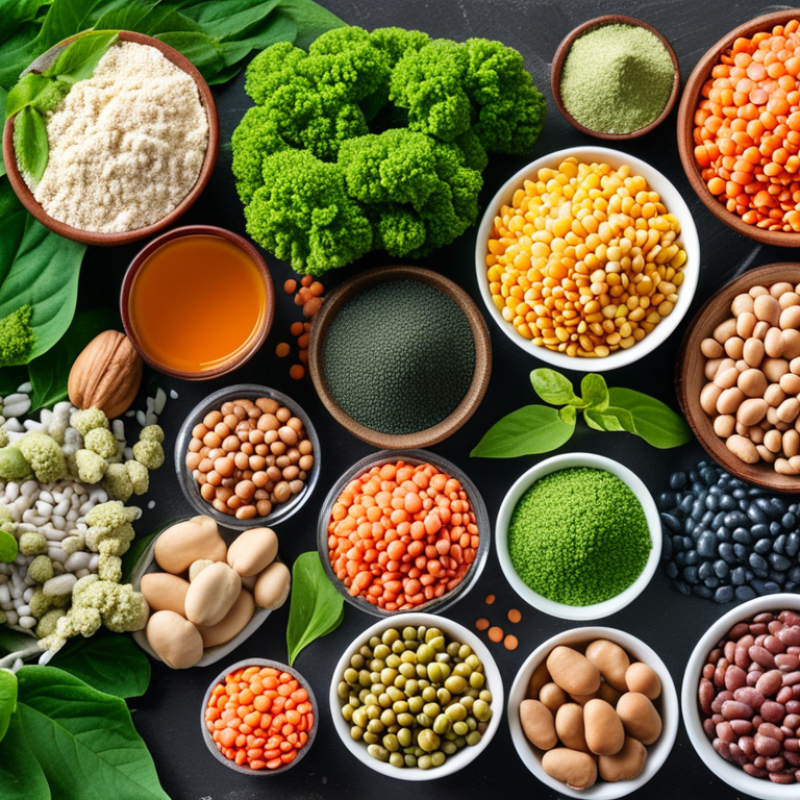
How to Source the Future of Plant Proteins Globally?
The global plant protein landscape is diverse, seasonal, and often misunderstood. Soy, pea, lentil, chickpea, fava bean, and rice serve different technical needs. Their protein levels, flavors, textures, and processing requirements vary widely. A reliable sourcing strategy begins with a clear product brief. Define nutrition targets, allergen controls, moisture limits, and desired texture. Then compare growing regions, harvest calendars, transport routes, and processing capacity. A low-cost ingredient may become expensive after long storage or complex freight handling. Local knowledge matters. It can reveal crop risks that spreadsheets miss.
Tips: Request recent certificates of analysis, traceability records, and contaminant testing. Confirm whether suppliers can maintain quality across multiple harvests. Visit farms or processing sites when practical. Ask direct questions about water use, labor standards, and land management. Documentation should be current, not decorative. Sample testing remains essential.
Sourcing teams should map at least two suitable regions for critical ingredients. Weather events can quickly affect availability and pricing. However, wider sourcing is not automatically better. Longer supply chains may increase emissions, delays, and quality variation. Small producers may offer valuable crops, but they may need technical support and clearer specifications. This is where buyers need patience and discipline. Perfect data rarely exists. We should challenge our assumptions, especially when sustainability claims lack measurable evidence. A thoughtful sourcing model balances resilience, responsible production, food safety, and consistent performance.
A reliable plant protein map begins with crop geography, not marketing claims. Soybeans remain concentrated in Brazil, the United States, Argentina, China, and India. Their protein content supports food ingredients, but regional weather can quickly affect supply. Scale matters.
Peas are widely grown across Canada, northern Europe, Russia, and parts of China. Canada is especially important for yellow pea production and fractionation capacity. Chickpeas have strong production bases in India, Australia, Türkiye, Canada, and Mexico. Lentils are closely linked to Canada, India, Australia, and Türkiye. Fava beans grow across China, Europe, Australia, and North Africa, with increasing interest in their mild flavor and useful amino acid profile.
Rice and wheat can also provide protein ingredients, especially where milling infrastructure already exists. However, sourcing should examine more than harvest volume. Buyers need verified farm origins, processing locations, water conditions, transport routes, and quality testing records. Maps can mislead. A large crop region may lack suitable protein-processing facilities, forcing long-distance transport. Climate resilience also deserves closer attention, since drought, heat, and soil degradation may shift production zones. Public statistics are valuable, but they can be delayed or inconsistent. Cross-checking national data, producer records, and independent assessments creates a stronger sourcing decision. The industry still underestimates smallholder regions, where data is thinner but agricultural knowledge is often deep.
How to Source the Future of Plant Proteins Globally?
Evaluating Nutritional, Environmental, and Economic Factors
Global sourcing needs more than low prices. Nutrition must guide every purchasing decision. Legumes provide protein, fiber, iron, and folate. However, their amino acid balance can vary. FAO dietary guidance recommends evaluating protein quality, not protein quantity alone. Combining legumes with grains can improve amino acid coverage. Processing may also improve digestibility, but it can increase sodium and energy use. Small laboratory tests can reveal these differences before large contracts begin.
Tips: Compare DIAAS results, pesticide records, soil data, and water stress. Request harvest dates and storage conditions. Local samples matter.
Environmental data can change the sourcing map. FAO reported that agrifood systems produced about one-third of global greenhouse gas emissions in 2022. Our World in Data, using Poore and Nemecek’s research, shows pulses generally require far less land and produce fewer emissions than beef. Yet soy, peas, and fava beans do not perform equally everywhere. A crop grown under irrigation may carry hidden water costs. I would not claim one protein wins globally. The answer depends on climate, transport, yields, and processing.
Economic signals are encouraging but uneven. The Good Food Institute reported global plant-based meat and seafood retail sales of about 8.2 billion dollars in 2022. Still, inflation can push consumers toward cheaper staples. Sourcing should include farmer income, crop resilience, and contract fairness. Cheaper ingredients may fail when drought interrupts supply. A spreadsheet can miss that risk. Seasonal purchasing, regional processing, and multi-crop contracts can improve reliability without pretending the system is perfect.
This comparison combines protein density in dry foods with estimated greenhouse-gas emissions per 100 grams of protein. Legumes generally provide high protein density with comparatively low emissions, while wheat and rice offer lower protein density and higher emissions per unit of protein. Soybeans and peanuts are nutritionally dense, but their environmental performance depends on land-use change, farming practices, processing, and transport.
Protein-density values are based on rounded USDA FoodData Central entries for dry foods. Emissions estimates are rounded global averages from the Poore and Nemecek dataset as presented by Our World in Data; results vary by region and production system. Economic sourcing should additionally assess local farm prices, yield stability, water availability, infrastructure, and trade exposure.
How to Source the Future of Plant Proteins Globally?
Building Reliable International Supply Chains
Global plant-protein sourcing is shifting from price chasing to supply-chain design. The Good Food Institute reported that global retail sales of plant-based meat reached about US$7.9 billion in 2022. Demand is growing, but crop yields remain uneven. Drought, port congestion, and changing export policies can disrupt a promising contract within weeks. Over 80% of global merchandise trade moves by sea, according to UNCTAD’s Review of Maritime Transport 2023. That makes freight reliability as important as ingredient quality.
A stronger model begins with regional diversification. Buyers should qualify suppliers across at least two growing areas, while checking protein content, moisture, allergens, pesticide records, and microbial controls. Each shipment needs a documented chain of custody, from farm lot to processing line. Digital records help, but they are not magic. Small suppliers may still rely on spreadsheets or paper certificates. That weakness deserves honest attention. Long-term contracts can protect supply, yet rigid volumes may create waste when harvests change. Flexible clauses, safety stock near processing sites, and quarterly risk reviews are more practical.
Tips: Map every critical ingredient and its backup source. Test samples before signing annual agreements. Track weather, freight rates, and export rules monthly. Keep two approved logistics routes. Review failure scenarios with local partners, not only headquarters. Prices look attractive until a delayed container stops production.
Sourcing the future of plant proteins requires more than tracking headline growth. It requires testing whether innovation survives real kitchens, farms, and import rules. The Good Food Institute’s 2024 State of the Industry reports show continued investment across fermentation, cultivated, and plant-based protein. Funding remains uneven. Commercial scale is still difficult. Meanwhile, the OECD-FAO Agricultural Outlook 2024–2033 projects rising protein demand and highlights pressure on land, water, and feed. That gap matters.
Future opportunities will likely favor ingredients that perform under local conditions: stable texture in hot meals, neutral flavor, and reliable nutrition. Fermentation may improve amino-acid profiles and sensory quality, while crop breeding could reduce processing needs. Yet these claims require independent testing.
The Good Food Institute’s 2023 U.S. retail data recorded $8.1 billion in plant-based category sales. Unit sales declined. That is a warning.
Global sourcing teams should compare cost per usable protein, cold-chain exposure, allergen controls, and regional consumer acceptance. Reports can guide decisions, but they cannot replace pilot batches, farmer interviews, or shelf-life trials. Some forecasts still assume rapid adoption. Real procurement is messier.
Create a clear product brief. Include protein targets, moisture limits, allergens, flavor, and texture. Be specific.
Soy, pea, lentil, chickpea, fava bean, and rice perform differently. Their flavors, protein levels, textures, and processing needs vary.
Review harvest calendars, crop risks, transport routes, storage needs, and processing capacity. Local knowledge can reveal problems hidden in spreadsheets.
Request recent certificates of analysis, traceability records, contaminant testing, pesticide records, and microbial controls. Old paperwork is not enough.
Samples help verify protein content, moisture, allergens, flavor, and texture. Laboratory results may expose inconsistencies early.
Map at least two suitable growing regions. Diversification improves resilience, but longer supply chains can increase delays and quality variation.
Approve backup suppliers and two logistics routes. Keep safety stock near processing sites. Track weather, freight rates, and export rules monthly.
Use flexible volume clauses and review risks quarterly. Rigid commitments may create waste. Perfect forecasting is unrealistic.
Ask about water use, labor standards, land management, and measurable evidence. Claims without current records deserve careful questioning.
Provide clear specifications and practical technical support. Their crops may be valuable, but their documentation can need improvement. This takes patience.
Sourcing the future of plant proteins globally requires a clear understanding of where key crops are grown, how they are processed, and what factors influence their long-term availability. This article examines major plant protein sources, including pulses, grains, oilseeds, and emerging crops, while comparing producing regions according to nutritional value, environmental impact, production efficiency, and economic potential. It also considers how climate conditions, farming practices, infrastructure, and trade relationships shape the global sourcing landscape.
Reliable international supply chains will depend on diversified origins, transparent standards, responsible resource management, and stronger cooperation between growers, processors, and food manufacturers. At the same time, innovations in crop development, protein extraction, fermentation, and food formulation may create new opportunities for improving taste, functionality, affordability, and sustainability. By connecting regional strengths with evolving consumer needs, the plant protein sector can build a more resilient food system and help answer the question: what is the future of vegetal proteins in the food industry?

Bolly Biology