Why Do Manufacturers Face Challenges With Plant Proteins?

Time:2026-10-19 Author:Madeline
0%

Plant proteins have moved from a niche option to a serious manufacturing category. Yet the factory floor tells a less polished story. The question, “what challenges do manufacturers face with plant proteins,” involves taste, texture, nutrition, cost, and dependable supply.

The Good Food Institute reported that U.S. plant-based retail sales reached approximately $8.1 billion in 2023. However, unit sales declined, showing that consumer interest does not guarantee repeat purchases. Circana data also indicates pressure from inflation and changing household budgets. Manufacturers must therefore create products that perform like meat while remaining affordable. That balance is difficult.

Professor David Julian McClements, a food scientist at the University of Massachusetts Amherst, has repeatedly stressed this principle: “Taste is the most important factor.” His point sounds simple. It is not.

Pea, soy, fava bean, and wheat proteins behave differently during mixing, heating, and storage. A formulation may look convincing in the laboratory, then become dry after extrusion. It may deliver protein, yet leave a bitter aftertaste. It may also require oils, binders, flavors, or processing aids that increase cost and complicate labels.

The Institute of Food Technologists highlights similar formulation concerns, including protein functionality, moisture control, and sensory quality. Meanwhile, FAO research connects pulses with resilient food systems but also recognizes supply and processing limitations. These reports support a practical conclusion: plant-protein manufacturing is not simply an ingredient substitution exercise. It is a systems problem.

Some assumptions still deserve challenge. “Plant-based” does not automatically mean healthier or more sustainable. Manufacturers need transparent data, careful testing, and honest claims. The strongest products will combine credible nutrition with familiar texture, reliable production, and a price consumers can accept.
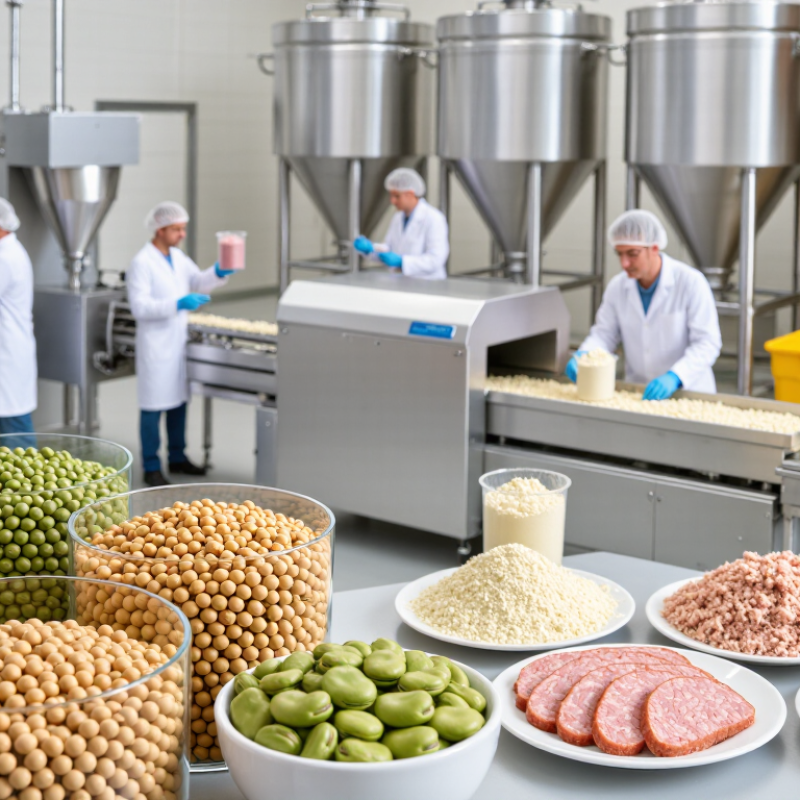
Why Do Manufacturers Face Challenges With Plant Proteins?

What Are Plant Proteins and Why Are They Important to Manufacturers?

Plant proteins are proteins extracted from plants such as peas, soybeans, lentils, grains, and seeds. Manufacturers use them in beverages, bakery products, snacks, meat alternatives, and nutrition powders. Their value extends beyond nutrition. They can support product diversification and respond to growing interest in lower-animal-input foods.

In a factory, plant protein is more than a dry ingredient. Its particle size, moisture level, flavor, and solubility affect mixing and processing. A protein powder that disperses smoothly in a test beaker may form lumps in a large tank. Small details matter. Manufacturers also examine amino acid quality, digestibility, allergen controls, supply consistency, and labeling requirements. These checks protect product reliability and consumer trust.

Plant proteins can help manufacturers manage changing market expectations, but they are not a simple replacement for animal proteins. Some create earthy flavors, chalky textures, or weak structure. Heat can improve texture, yet it may reduce performance in certain formulas. A plant-based formulation can look successful in development, then fail during filling or storage. This gap deserves more attention. Reliable manufacturers test ingredients under real production conditions, record batch differences, and adjust formulas carefully. Sustainability claims also require evidence, because farming methods, transport, water use, and processing energy can vary widely. The industry still has room to improve.

Why Do Manufacturers Face Challenges With Plant Proteins?

What Are Plant Proteins and Why Are They Important to Manufacturers?

Plant proteins are proteins obtained from crops such as soybeans, peas, lentils, chickpeas, and wheat. Their protein concentration varies considerably, which affects formulation efficiency, texture, processing, and cost. Soybeans provide the highest protein content among the selected dry ingredients, while chickpeas and wheat flour provide less protein per 100 grams. Manufacturers must therefore balance nutritional targets with functionality, flavor, solubility, and processing performance.

Data: Approximate protein content per 100 g of dry ingredient, based on USDA FoodData Central reference food data. Values may vary by variety and processing method.

Which Technical Properties Make Plant Proteins Difficult to Process?

Plant proteins are difficult to process because their technical properties change quickly. In pilot trials, operators often see inconsistent hydration within the same batch. Some particles absorb water immediately, while others remain gritty for several minutes. This uneven water absorption affects mixing, pumping, and final texture.

Protein solubility is another major concern. Many plant proteins dissolve poorly near their isoelectric point. They can form sediment, lumps, or a thick layer on processing equipment. Heat may improve structure, but excessive heat can cause unwanted gelation or a cooked flavor. High shear can reduce particle size, yet it may also create excessive foam. Emulsification is similarly sensitive to pH, salt, temperature, and mixing speed. Small changes can produce a noticeably different product. I have found that laboratory results sometimes look cleaner than factory performance. Scale-up exposes problems that small tests hide.

Tips: Measure hydration time, viscosity, pH, and particle size during every trial. Add water gradually, not all at once. Keep mixing conditions consistent. Test several temperatures before choosing a process window. Leave room for adjustment. Natural variation is real, and ignoring it can create costly surprises.

Why Do Manufacturers Face Challenges With Plant Proteins? - Which Technical Properties Make Plant Proteins Difficult to Process?

Technical Property Typical Plant-Protein Behavior Indicative Data or Range Why It Creates Processing Difficulty Common Processing Response Challenge Level
Protein Solubility Solubility changes substantially with pH, heat exposure, ionic strength, and protein source. Many plant proteins show their lowest solubility near their isoelectric point, commonly around pH 4–5.5. Poor dispersion can cause sedimentation, gritty mouthfeel, uneven nutrition, and unstable beverages. Control pH, use high-shear hydration, apply controlled heat treatment, and select suitable salts or stabilizers. High
Water-Holding Capacity Protein particles bind water through polar groups, capillary pores, and structural networks. Typical water absorption values for plant-protein ingredients may range from approximately 1.5 to 4.0 g water per g dry ingredient, depending on particle size and processing history. High absorption increases viscosity and mixing torque; low absorption can cause weak structure and phase separation. Adjust hydration time, water ratio, mixing energy, temperature, and ingredient sequence. High
Oil-Holding Capacity Hydrophobic regions of proteins can bind and retain lipids, while particle structure affects oil entrapment. Many protein flours and concentrates exhibit oil-holding capacities of roughly 0.8–2.5 g oil per g dry ingredient. Oil uptake changes batter viscosity, extrusion behavior, emulsion stability, and final product density. Optimize fat addition rate, pre-emulsify oils, and balance protein with starches or hydrocolloids. Medium–High
Emulsifying Ability Plant proteins can adsorb at oil–water interfaces, but performance depends on solubility, molecular flexibility, and surface charge. Emulsion performance generally improves away from the isoelectric point and declines after excessive heat denaturation. Insufficient interfacial coverage can produce oiling-off, creaming, coalescence, or inconsistent texture. Use controlled homogenization, pH adjustment, thermal optimization, and appropriate emulsifier systems. High
Gelation and Thermal Denaturation Heating unfolds proteins and may create a three-dimensional gel network; excessive heating can cause aggregation and toughness. Denaturation temperatures commonly fall within approximately 70–100°C, but vary with protein source, moisture, pH, and mineral content. Small changes in temperature or residence time can shift texture from weak and crumbly to hard, rubbery, or brittle. Use precise temperature profiles, moisture control, shear management, and rapid cooling when required. High
Viscosity and Rheology Hydrated plant proteins often produce shear-thinning systems, with viscosity strongly affected by concentration and hydration time. A 1–2 percentage-point change in solids or moisture can materially alter mixing torque, pumping pressure, and extrusion stability. The material may be difficult to pump, fill, spread, or extrude consistently across production batches. Monitor torque, apparent viscosity, moisture, temperature, and residence time during processing. High
Particle Size and Dispersibility Fine particles hydrate rapidly but may agglomerate; coarse particles disperse slowly and can create a gritty texture. Ingredient particle sizes may range from less than 100 µm for fine powders to several hundred micrometres for coarser flours. Poor wetting and powder agglomeration lead to lumps, sediment, nozzle blockage, and uneven formulation. Use controlled milling, sieving, pre-wetting, agglomeration, or staged powder addition. Medium–High
Extrusion Texturization Protein alignment and cross-linking depend on moisture, temperature, shear, die geometry, and feed composition. High-moisture extrusion commonly operates at approximately 40–70% feed moisture, while low-moisture systems often use about 15–35% moisture. Minor changes in moisture or thermal energy can affect expansion, fibrousness, hardness, die pressure, and residence time. Use tightly controlled feed moisture, screw configuration, barrel temperature, and cooling-die conditions. High
Foaming and Air Incorporation Some plant proteins stabilize air–water interfaces, while others produce unstable or excessively dense foams. Foam stability is highly dependent on protein concentration, pH, soluble solids, whipping energy, and drainage rate. Uncontrolled air can cause variable density, filling inaccuracies, oxidation, collapse, or an undesired dry mouthfeel. Control mixing speed, deaeration, temperature, solids concentration, and processing time. Medium
Astringency and Off-Flavor Precursors Phenolic compounds, saponins, lipoxygenase activity, and oxidation products can contribute bitterness, beany notes, or astringency. Sensory intensity varies with crop variety, fractionation, storage, thermal history, and particle size; it is not reliably predicted by protein percentage alone. Flavor masking or excessive processing may be required, potentially increasing formulation cost or reducing nutritional quality. Apply blanching, fermentation, enzymatic treatment, deodorization, flavor balancing, and oxygen control where appropriate. High
Antinutritional Factors Phytate, trypsin inhibitors, tannins, lectins, and saponins may affect digestibility, mineral availability, or sensory quality. Levels vary widely by species, cultivar, fraction, and treatment; heat, soaking, germination, and fermentation can reduce several of these compounds. The process must achieve sufficient reduction without causing excessive protein denaturation, nutrient loss, or energy consumption. Combine raw-material selection with validated thermal, enzymatic, fermentation, or fractionation processes. Medium–High
Batch-to-Batch Variability Protein functionality changes with crop variety, growing conditions, harvest maturity, storage moisture, and fractionation method. Protein content and functionality can vary even when the declared ingredient category remains unchanged. A fixed recipe may produce different viscosity, texture, flavor, yield, or extrusion pressure from one lot to another. Set functional specifications for solubility, moisture, particle size, water absorption, viscosity, and sensory quality. High
Protein–Starch and Protein–Fiber Interactions Proteins compete with starches and fibers for water and may alter gelatinization, swelling, viscosity, and structural development. Higher protein replacement generally reduces available water for starch gelatinization and can increase formulation sensitivity. Products may become dense, dry, crumbly, tough, or difficult to shape when ingredient ratios are changed. Rebalance water, thermal input, particle size, binders, starch type, and mixing order. High
Note: Numerical values are indicative technical ranges reported for plant-protein ingredients and may vary according to protein source, extraction method, moisture content, particle size, pH, temperature, and analytical method. They should be confirmed through product-specific testing before commercial process validation.

How Do Flavor, Texture, and Appearance Affect Product Development?

Plant-protein manufacturers face a sensory problem before a formulation problem. Consumers may accept the environmental message, but they still expect familiar eating experiences.

The International Food Information Council’s 2024 Food & Health Survey found that taste mattered to 84% of consumers, while price mattered to 79%. A dry bite can therefore erase strong nutritional claims.

Flavor often changes during heating, storage, and contact with sauces. Pea and soy proteins may bring earthy, bitter, or beany notes.

Texture creates another barrier. A burger that crumbles like wet paper feels unfinished. A drink that separates after refrigeration looks unsafe, even when it is safe.

Appearance also shapes expectations. The Good Food Institute’s 2023 State of the Industry report valued the global plant-based food market at more than 20 billion dollars, showing commercial potential.

However, growth does not remove sensory weaknesses. I have seen prototypes improve after reducing particle size, adjusting moisture, and testing aroma after cooking. Yet developers sometimes overtrust laboratory scores. Real plates can disagree.

Tips:

Test products hot, cold, and after opening. Use trained sensory panels and ordinary consumers. Measure firmness, juiciness, color stability, and aftertaste. Compare samples beside familiar foods, not in isolation. Review the Innova Market Insights 2024 trends report for texture-led product opportunities, but treat trend data as direction, not proof. Small improvements matter. A softer bite may outperform a longer ingredient list.

What Supply Chain and Cost Issues Influence Plant Protein Production?

Why Do Manufacturers Face Challenges With Plant Proteins?

What Supply Chain and Cost Issues Influence Plant Protein Production?

Plant protein production begins with a fragile supply chain. Crops may come from distant farms, while factories need steady volumes throughout the year. Weather, soil conditions, and transport delays can quickly change raw material prices. One late shipment can leave processing equipment underused for days.

Quality is another cost driver. Peas, soybeans, oats, and other crops can vary in protein content, moisture, color, and flavor. Manufacturers often test each delivery before production. Some batches need extra processing or blending. That creates waste, labor costs, and planning problems. Consistency remains difficult.

Energy and equipment expenses also affect final prices. Grinding, concentrating, drying, and storage require substantial power. Refrigerated transport may add more pressure for liquid or fresh products. Smaller manufacturers often lack purchasing power and backup suppliers. Their costs rise faster during shortages.

A useful estimate is rarely perfect. Forecasts can miss sudden crop failures or fuel increases. Manufacturers may also invest in local suppliers, but local sourcing does not always provide enough volume. This trade-off deserves closer attention. Lower transport distance can still mean higher processing costs when facilities are limited.

How Are Manufacturers Improving the Quality and Scalability of Plant Proteins?

Manufacturers are improving plant protein quality by treating texture as an engineering problem. Controlled milling creates smaller, more uniform particles. This reduces gritty bites in beverages and meat alternatives. Technicians then adjust hydration, heat, and mixing speed during pilot runs. Small changes matter.

Fermentation and enzymatic processing can soften earthy flavors and improve protein functionality. These methods may increase water binding, emulsification, and tenderness without relying on excessive additives. Quality teams measure viscosity, solubility, color, aroma, and microbial stability at several production stages. That evidence helps operators repeat a formula when raw materials vary by season or region. Some batches still fail.

Scalability depends on more than larger equipment. Manufacturers are using continuous mixing, automated dosing, and inline sensors to reduce uneven cooking. Digital records can connect ingredient lots with temperature curves and final texture. Pilot plants remain essential because a smooth laboratory sample can become dry after industrial heating. The uncomfortable lesson is that plant proteins rarely behave identically. More testing costs money. Ignoring variation can cost more through waste and inconsistent customer experiences.

FAQS

Why is the plant protein supply chain fragile?

Crops may travel from distant farms, while factories need steady supplies throughout the year. One delayed shipment can leave equipment idle for days.

Which factors can change raw material costs?

Weather, soil conditions, fuel prices, and transport delays can quickly raise crop costs. Forecasts sometimes miss sudden changes.

Why do manufacturers test every crop delivery?

Protein content, moisture, color, and flavor can vary between batches. Testing helps prevent unstable products, but it adds labor and waste.

How does raw material variation affect production?

Some batches need extra processing or blending. This can increase costs and disturb production schedules. Consistency remains difficult.

Why are plant protein products expensive to process?

Grinding, concentrating, drying, and storage require substantial energy. Refrigerated transport can add costs for liquid or fresh products.

How can manufacturers improve plant protein texture?

Controlled milling creates smaller, more uniform particles. This can reduce gritty bites in drinks and meat alternatives.

Can fermentation and enzymes improve plant protein quality?

They may soften earthy flavors and improve water binding, emulsification, and tenderness. Results still vary across ingredients and batches.

What technology supports larger-scale production?

Continuous mixing, automated dosing, and inline sensors can reduce uneven cooking. Digital records can connect ingredient lots with final texture.

Why are pilot plants still important?

A smooth laboratory sample may become dry after industrial heating. Pilot testing reveals problems before full production begins.

Is local sourcing always cheaper?

No. Local suppliers may reduce transport distance but lack enough volume. Limited facilities can make local processing more expensive.

Conclusion

Plant proteins are increasingly important to manufacturers seeking sustainable, nutritious, and flexible alternatives for food and beverage products. However, what challenges do manufacturers face with plant proteins? Their functionality can vary significantly depending on the source, processing method, and storage conditions. Issues such as limited solubility, poor emulsification, weak water retention, and sensitivity to heat can make formulation and large-scale processing more complex.

Manufacturers must also manage flavor, texture, and appearance, since earthy notes, bitterness, dryness, or uneven structure may reduce consumer acceptance. In addition, inconsistent crop quality, seasonal supply, transportation demands, and fluctuating raw material costs can affect production planning and profitability. To improve quality and scalability, manufacturers are developing better extraction and purification methods, combining different plant sources, using improved processing technologies, and applying careful formulation strategies. These efforts can help create plant-based products with more consistent performance, appealing sensory qualities, and greater commercial reliability.

Madeline

Madeline

Madeline is a dedicated marketing professional with a wealth of expertise in our company's core offerings. With a keen understanding of the industry, she brings a unique perspective to her role, consistently delivering high-quality content that highlights the superior aspects of our products. As......